
Two questions decide how a difficult load moves. Is it abnormal — and if it is, can it be taken apart? Get those the right way round and the rest is process. Get them wrong and you have applied for a permit you were never going to be granted.
This is the section on loads that are not ordinary freight: abnormal, bulk, and the special cargo that needs a particular kind of truck. Every legal limit here comes from TRH 11, the South African standard that governs abnormal load vehicles, and every number about real freight comes from what shippers have actually posted on Kweli Load Exchange.
What makes a load abnormal
TRH 11 §1.2 is short and worth reading exactly as written: a vehicle, or a vehicle with its load, “can be abnormal either in terms of dimension or mass or both.” There are only those two ways.
Dimension abnormality — six ways to be too big
A combination is dimensionally abnormal when any one of these exceeds its legal limit:
- Length — 12,5 m single vehicle · 18,5 m articulated · 22,0 m other combinations
- Width — 2,6 m
- Height — 4,3 m
- Overhangs — how far the vehicle body extends beyond its axles
- Load projections — how far the cargo extends beyond the vehicle
- Wheelbase
Any one of the six is enough. A load can be well inside every other limit and abnormal on projection alone.
Mass abnormality
TRH 11 §1.2.2: a mass abnormality exists when the allowable mass of the combination “or one or more axle groups” exceeds the legal limits. One axle group over is enough, even when the total is legal — which catches more operators than any other rule in road transport.
The indivisibility test — read this before applying for anything
TRH 11 §2.1, verbatim:
“Permits will only be considered for abnormally dimensioned loads that are considered to be indivisible.”

If the load can be broken into smaller parts, it must be. A transformer, a mining excavator, a bridge beam, a pressure vessel — these are single objects that cannot be reduced. Forty pallets of the same cargo are not one indivisible load, however inconvenient two trips would be.
This is the first question a permitting authority asks, and it is the cheapest one to answer yourself before you start. It also explains why abnormal load work concentrates in mining, construction, energy and heavy industry: those are the sectors that produce genuinely single objects too large for an ordinary truck.
The road decides too: route categories A to D
An abnormal load is not judged in isolation — it is judged against the road it will use. TRH 11 classifies road sections on two things it can measure: paved width and posted speed limit.
| Category | Paved width | Posted speed limit |
|---|---|---|
| A | ≥ 18 m | all |
| B | 13 m ≤ width < 18 m | ≥ 100 km/h |
| C | 13 m ≤ width < 18 m | < 100 km/h |
| 10 m ≤ width < 13 m | ≥ 100 km/h | |
| D | 10 m ≤ width < 13 m | < 100 km/h |
| width < 10 m | all |
The logic is stated plainly in the standard: “the width of the combination is the primary determining factor [in] the amount of disturbance which it causes in the traffic stream.” A wide load on a narrow two-lane road blocks traffic in both directions; the same load on a dual carriageway barely registers.
Which is why the same load can be routine on one route and heavily conditioned on another — and why the route, not just the load, belongs in your planning from the first day.
What actually moves on this network
Real, non-test loads posted on Kweli Load Exchange, read 16 August 2026. Every one of them carries a cargo type:
| Cargo type | Share of loads |
|---|---|
| General freight | 38% |
| Mining | 19% |
| Other | 17% |
| Agricultural | 10% |
| Building materials | 7% |
| Food and beverages | 4% |
| Vehicles | 3% |
| Furniture | 1% |
| Steel coils · construction · containers · fuel | Under 1% each |
Mining is the second-largest category on the board, and it is the one most likely to produce both bulk work and genuinely abnormal loads. Note also the 42 filed as “other” — a fifth of the board — which is a reminder that the categories above are a starting point rather than a complete map of what moves.
The three families
Abnormal
Indivisible loads that exceed a dimension or mass limit. They move on a permit, with conditions attached: route, timing, escorts, warning apparatus and speed restrictions. Lowbed, extendable flatbed and pole trailers exist for this work.

Bulk
Loose material carried by volume and discharged rather than unloaded — sand, stone, coal, ore, grain, cement. It is not abnormal, but it has its own equipment and its own constraint: bulk is usually dense, so a bulk trailer runs out of legal mass long before it runs out of space.

Special
Cargo that is ordinary in size but needs particular handling: fuel and chemicals, livestock, vehicles, glass, temperature-controlled goods. The truck is normal; the paperwork, the training and the equipment are not.
Guides written for this section
-
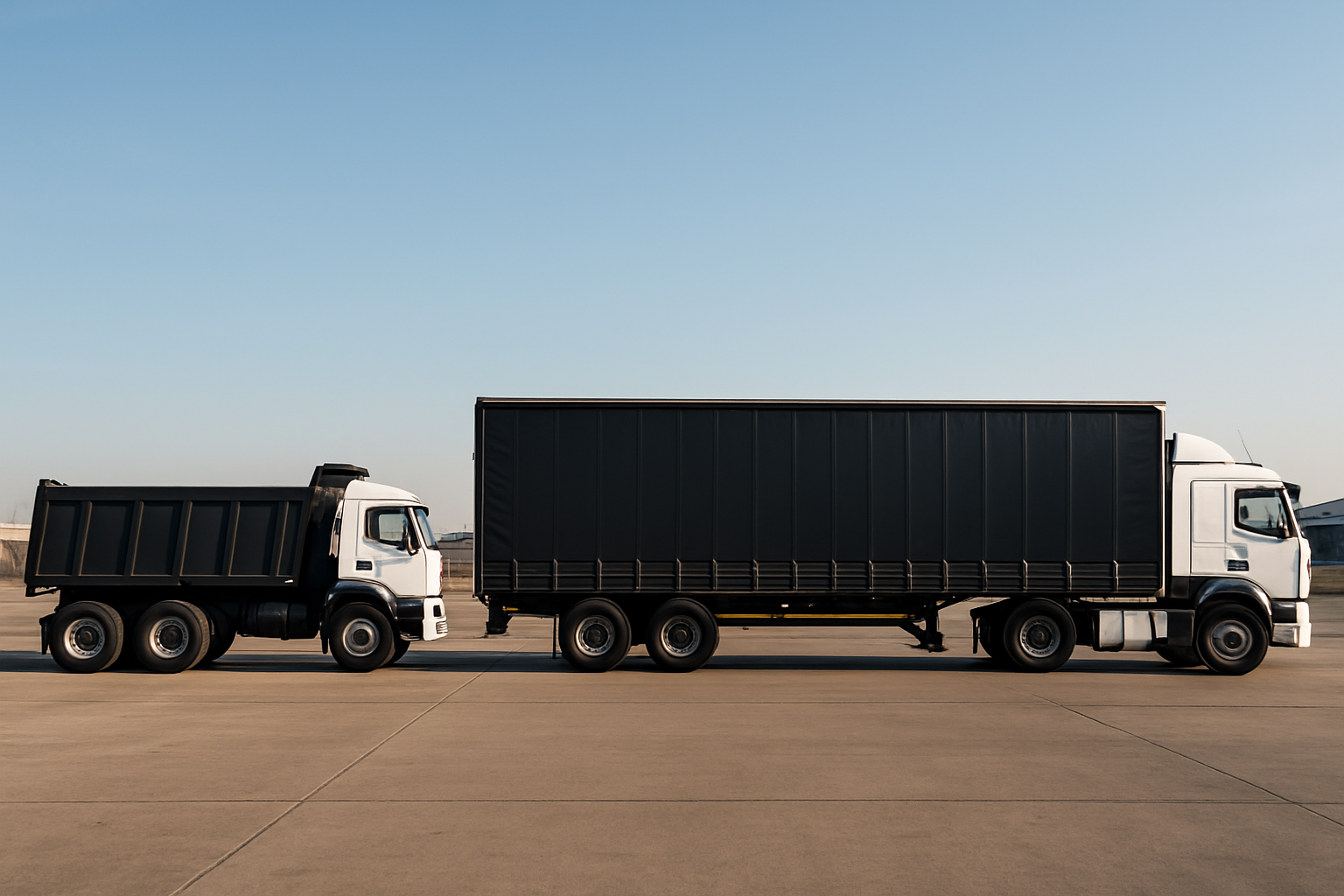
Why Bulk Trailers Are Short: Density, Payload and the Mass Ceiling
Bulk trailers are short. General freight trailers are long. That is not a styling choice — it is the density problem, solved…
-
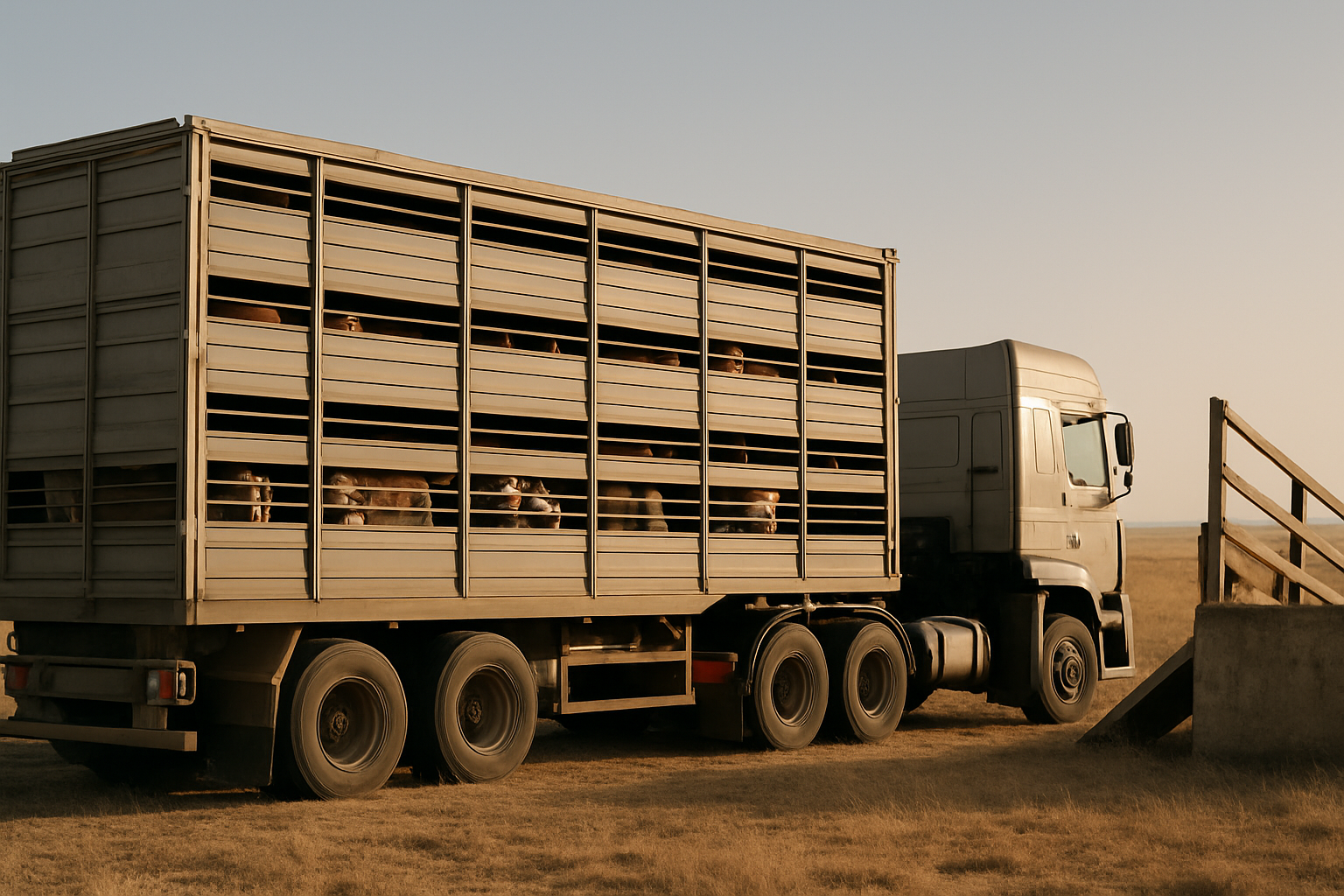
Special Cargo: The Loads Where the Truck Is Ordinary and Nothing Else Is
Special cargo is the freight where the truck is ordinary and everything else is not. It fits inside every legal limit. It…
-

Overhangs and Load Projections: The Abnormality Most Often Missed
Overhang and projection are two different things, and mixing them up is how a legal truck becomes an illegal one. Overhang is…
-

Abnormal Load Escorts, Flags and Warning Lights: What the Permit Requires
A permit does not just say yes. It attaches conditions — escorts, flags, lights, boards, speed limits — and those conditions are…


Guides in this section
- Abnormal load permits in South Africa — how the permit process works
- Legal truck dimensions and mass — the limits you must exceed before any of this applies
- Dry bulk loads in South Africa — the bulk family in practice
- Flatdeck and tautliner loads — where general freight ends and special begins
- Which trailer for which cargo — all 34 trailer types, including lowbed and extendable
Watch
- Abnormal Load Transport on the N14 — SA Today. A real abnormal load on a named South African route.
- Biggest abnormal load transported in South Africa — Adriaan Scholtz.
Linked because they show South African abnormal loads on South African roads.
Questions people ask
What is an abnormal load in South Africa?
A vehicle, or a vehicle with its load, that exceeds a legal limit on either dimension or mass. Dimensionally that means length, width, height, overhangs, load projections or wheelbase — any one is enough. For mass it means the combination or any single axle group.
Can I get a permit for any oversized load?
No. TRH 11 states that permits will only be considered for abnormally dimensioned loads that are indivisible. If the load can be broken into smaller parts, it must be — however inconvenient the extra trips.
What are route categories A, B, C and D?
A classification of road sections by paved width and posted speed limit. Category A is a road at least 18 m wide; category D is under 10 m, or 10–13 m at under 100 km/h. Wider, faster roads absorb an abnormal load with less disruption, so the same load can be routine on one route and heavily conditioned on another.
Is a bulk load an abnormal load?
Usually not. Bulk is loose material carried by volume — sand, coal, ore, grain — and it normally travels inside the ordinary limits. Its constraint is density: a bulk trailer typically runs out of legal mass before it runs out of space.
What kind of freight moves most on this network?
General freight is the largest category at roughly 38% of loads, then mining at 19%, agricultural at 10% and building materials at 7%. That is one network rather than a national picture, and about one load in six is filed simply as “other”.
Where the numbers come from
- Types of abnormality, the six dimensions, and the indivisibility rule — TRH 11, Dimensional and Mass Limitations and Other Requirements for Abnormal Load Vehicles, §1.2 and §2.1. Quoted directly.
- Route categories — TRH 11 Table 1.3, cross-checked against both the 8th Revision (Pretoria 2010) and the 2017 revision.
- Legal dimensions — Regulation 221 (length) and Regulation 224(b) (width and height), as reproduced in TRH 11.
- Cargo type shares — every real non-test load on Kweli Load Exchange, read 16 August 2026.
- Scale drawing — trailer dimensions from Kweli’s own equipment register.
This is orientation, not a permit application. Permit conditions, escort requirements, warning apparatus and speed restrictions are set case by case by the issuing authority, and TRH 11 runs to several chapters on them. Start here, then talk to the authority for your route.
Next, in the rest of the network
- Trucks for road freight — body, rig and axles, and the trucks that carry these loads
- Transport corridors — the routes, which decide as much as the load does
- Freight rates — what to charge
Kweli Load Exchange
Now find a load for your truck — or a truck for your load
Free for transporters and shippers. No commission, no subscription.
Local
and cross-border
See
who you are dealing with
R0
commission, always
List your truck and its corridors, or post a load. Your corridors decide which loads we show you first — they do not lock you out of the rest. Body, weight, fit, papers: we show them, and you decide.
WhatsApp-integrated · your number is your account. Nothing from an app store — you finish with your trucks and their corridors on the board.
New to Kweli? See what the network does → — load exchange, driver registry and the Pulse community.