
A truck is not one choice. It is three. What the load rides in, how the vehicle is coupled together, and how many axles carry the mass. Get those three right and the work follows; get one wrong and you own a truck that cannot legally or profitably do the job you bought it for.
This is the technical side of road freight, written for people who are new to it — starting out, buying a first truck, or moving from driving into owning. Every limit on this page comes from the South African standard that sets it, and every number about real trucks comes from what operators have registered on Kweli Load Exchange.
Start here
Buying your first truck? Start with what you intend to haul. The cargo picks the body, the body picks the rig, and the rig sets what you may legally weigh.
Already have a truck? Go to the axles and mass section. Most avoidable fines come from mass distribution, not from total mass.
Comparing models? The horsepower section explains what 380, 420 and 550 actually buy you, and what the law requires as a minimum.
A truck is three separate decisions
In everyday talk one word does the work of three. Someone says “I run a superlink” and you have learned how their vehicle is coupled — but nothing about what it carries. Someone says “tautliner” and you know the body, but not whether it is one trailer or two. The three facts are independent, and a load either fits all three or it does not fit at all.

1. The body — what the load rides in
The body is the part that touches the cargo. A curtain-side keeps rain off and opens from the side for forklift loading. A flatdeck carries anything you can strap or chain down and nothing that needs cover. A tipper discharges by lifting. A reefer holds a temperature.
Kweli’s equipment catalogue recognises 34 trailer body types, because the distinctions matter to whoever is loading you: a bitumen tanker, a food-grade tanker and an LPG tanker are three different vehicles with three different sets of paperwork, and none of them can take the other’s cargo.
2. The rig — how the vehicle is coupled
A rigid is one vehicle: cab and body on a single chassis. An articulated vehicle is a truck-tractor (the horse) pulling a semi-trailer on a fifth wheel. A superlink is a horse pulling two trailers, where the first trailer carries the coupling for the second. An interlink is the other two-trailer arrangement — the trade uses the two words differently and not always consistently — and a rigid with a drawbar pulls a full trailer behind a rigid truck.
The rig decides your legal length, and length is where new operators are most often caught out. It is set by Regulation 221, reproduced in TRH 11:
| Vehicle type | Maximum overall length | What that means |
|---|---|---|
| Single vehicle | 12,5 m | A rigid truck, excluding a semi-trailer |
| Articulated vehicle | 18,5 m | Truck-tractor and semi-trailer |
| Other combinations | 22,0 m | Interlinks and multiple trailers |


3. The axles — what you may legally carry
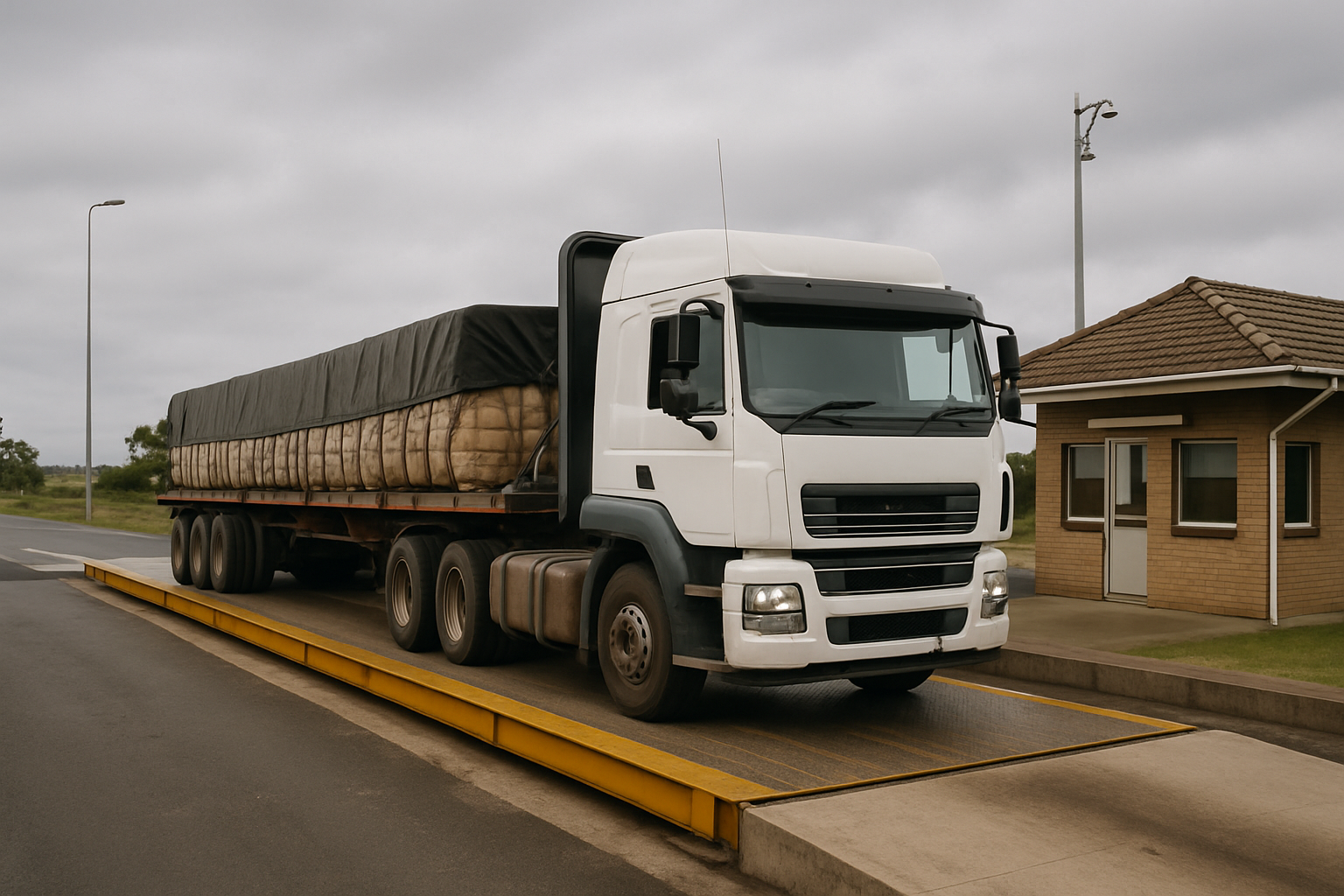
Axles are how mass reaches the road, and the law limits mass per axle group as well as in total. TRH 11 is explicit that a mass abnormality exists when the mass of the combination “or one or more axle groups” exceeds the limit.
Read that twice, because it is the single most expensive thing on this page: a combination can be inside its total permitted mass and still be illegal, because one axle group is over. A load placed too far back on the trailer lifts weight off the steering axle — legal on the weighbridge total, unsafe to drive, and chargeable.
Power: what 380, 420 and 550 actually mean
Trucks in this market are sold by horsepower. A FAW is a 380 or a 420; the number on the badge is the engine’s power and it is how operators talk about, advertise and resell their vehicles. It is the first thing a buyer asks about and the last thing they compromise on.
The law has an opinion too, and it is a surprising one. Regulation 239 works the other way round from how buyers think: rather than setting a minimum power for a truck, it sets a maximum mass for the power you have. The permitted mass in kilograms may not exceed the engine’s net power in kilowatts multiplied by 400 where the drawing vehicle is a truck-tractor, or by 240 for any other vehicle.
Turn it around and you have the legal floor for a given combination mass — divide by 400. A 56-tonne combination behind a truck-tractor legally requires 140 kW, which is roughly 188 horsepower.
Almost nobody runs anything close to that, and the gap is the real lesson. The legal minimum keeps a vehicle from blocking traffic; it says nothing about pulling a full load over a mountain pass at altitude, in heat, on a schedule, without cooking a driveline. That number is set by your route, not by the regulation — which is why two operators hauling identical mass on different corridors sensibly buy different trucks.
What the fleet on Kweli actually runs
Counts below are the real, non-test vehicles registered on Kweli Load Exchange, read from the platform on 16 August 2026. They are a snapshot of one network rather than a national census, and they are published with that limit stated.
By body
- Flatdeck — 103
- Tautliner — 89
- Tipper — 36
- Reefer — 13
- Container — 8
- Tanker — 4 · Lowbed — 4
- Car carrier — 1
- Other or not recorded — 66
By rig
- Articulated — 91
- Superlink — 64
- Rigid — 60
- Interlink — 2
- Rigid with drawbar — 1
- Not recorded — 106
Flatdeck and tautliner are two thirds of the fleet between them, which tells a new operator something useful: general freight is where the volume is, and it is also where the competition is. The thin columns — four tankers, four lowbeds, one car carrier — are specialised work with fewer trucks chasing it and higher barriers to entry, in equipment and in paperwork.
Guides in this section
Each one takes a part of the truck and goes deep, with scale drawings, photographs and the source behind every figure.
-

Truck Horsepower in South Africa: What 380, 420 and 550 Actually Buy You
In this market a truck is its horsepower. Nobody buys a “J5N” — they buy a 28.380, and the 380 is the…
-

Matching Your Truck to a Load: Why Only Two Things Decide What You See
Two things decide which loads you see: what type of truck you have, and which corridors it runs. That is the whole…
-

Truck Makes and Models in Southern Africa: How to Read a Spec Sheet
Three things on a truck’s spec sheet tell you what it is built for. Not the badge, not the price, and not…
-
Truck Axle Mass Limits in South Africa: Why One Axle Group Can Make You Illegal
You can be inside your total legal mass and still be illegal. That single sentence catches more new operators than any other…
-

Trailer Types in South Africa: Which Trailer for Which Cargo
The cargo picks the trailer. Not the other way round. This is the single most useful habit for anyone entering road freight,…
-

Truck Configurations in South Africa: Rigid, Articulated, Superlink and Interlink
A configuration is how the vehicle is put together — not what it carries. Rigid, articulated, superlink, interlink: each is a different…


Questions people ask
What is the difference between a superlink and an interlink?
Both are a horse pulling two trailers and both may run to 22,0 m. The law does not distinguish them: Regulation 221 puts both under “other combinations of vehicles”. The trade does, but definitions vary between suppliers and no South African standard we can find settles it, so we do not assert one. On this network superlinks outnumber interlinks 64 to 2.
How long is a truck allowed to be in South Africa?
Regulation 221 sets 12,5 m for a single vehicle, 18,5 m for an articulated vehicle and 22,0 m for other combinations including interlinks, all including load projections. Maximum width is 2,6 m and maximum height 4,3 m.
How much horsepower do I need?
Legally, less than you would expect: permitted mass may not exceed net kilowatts times 400 behind a truck-tractor, so a 56-tonne combination requires only about 140 kW. Practically, your route decides — gradient, altitude and heat matter far more than the regulation.
Can I be overloaded even if my total mass is legal?
Yes. TRH 11 states that a mass abnormality exists when the combination “or one or more axle groups” exceeds the limit. Total mass inside the limit with one axle group over is still an offence.
Which body type gets the most work?
On this network flatdeck (103) and tautliner (89) dominate, together about two thirds of registered trucks. That reflects general freight volume, and it also means the most competition.
Where the numbers come from
- Legal dimensions and mass — TRH 11, Dimensional and Mass Limitations and Other Requirements for Abnormal Load Vehicles, 8th Revision, Pretoria 2010, published by the Committee of Transport Officials. Regulation 221 (length) and Regulation 239 (power to mass) are the National Road Traffic Regulations it reproduces.
- Fleet composition — Kweli Load Exchange, real non-test vehicles, read 16 August 2026. One network, not a national census.
- Body and rig categories — Kweli’s equipment catalogue: 34 trailer body types and 7 vehicle configurations.
- Scale drawings — trailer lengths dimensioned from the same equipment catalogue. Vehicle width and height are drawn to plausible proportion and are not dimensioned.
Where we do not hold a figure, this page does not carry one. Horsepower ratings per model are one such gap: trucks are sold by horsepower but our catalogue records engine displacement, so model-by-model power figures belong in guides that cite the manufacturer directly rather than here.
Next, in the rest of the network
- Freight rates — what to charge once you know what you are running
- Transport corridors — the routes that decide how much truck you actually need
- Kweli Load Exchange — loads matched to your truck’s body type and corridor
Kweli Load Exchange
Now find a load for your truck — or a truck for your load
Free for transporters and shippers. No commission, no subscription.
Local
and cross-border
See
who you are dealing with
R0
commission, always
List your truck and its corridors, or post a load. Your corridors decide which loads we show you first — they do not lock you out of the rest. Body, weight, fit, papers: we show them, and you decide.
WhatsApp-integrated · your number is your account. Nothing from an app store — you finish with your trucks and their corridors on the board.
New to Kweli? See what the network does → — load exchange, driver registry and the Pulse community.