Vuna practical reading · Owner-operators and growing transport businesses
Start a repeat-work conversation with evidence of the service you delivered and a clear view of what you can repeat. A lower price cannot compensate for a promise the truck, cash position or operating team cannot sustain.
A first load through free LX can introduce two businesses. Repeat work still needs a fresh agreement about volume, equipment, collection windows, payment and exceptions. One completed job is a useful reference point, not an automatic contract.
Review the first job before asking for more
- Did collection and delivery meet the agreed requirements?
- Were the customer and driver given useful updates?
- Was the delivery evidence complete and readable?
- What changed, and was the change agreed?
- Did the complete trip support the price?
- What capacity can you honestly offer next time?
Describe outcomes accurately. “Collected within the agreed window and supplied the requested POD” is more useful than “100% reliable” without a defined record. If something went wrong, explain the action taken and what you will change.
Ask about the next operating need
For example: “This collection worked with our current flatdeck and a morning site slot. Are you planning similar movements next month, and would the same equipment and loading arrangement apply?” That is a service conversation, rather than a request for a favour.
If the customer wants more volume, distinguish a forecast from a firm commitment. Ask about notice periods, minimum confirmed work if any, cancellations and the process for changes. Do not buy a second truck on an informal statement that there will be “plenty of loads”.
Price repeatability honestly
Recurring work can reduce some uncertainty, but costs remain. Model actual distance, return exposure, site time and the cash needed before payment. Use the free calculators with your own records. Any volume discount should have an identified operational reason, not simply hope that more turnover will repair a loss.
A customer asking for a lower rate may be comparing a different scope. Clarify loading method, waiting, additional stops and evidence before comparing numbers.
Keep discovery and execution connected in your thinking
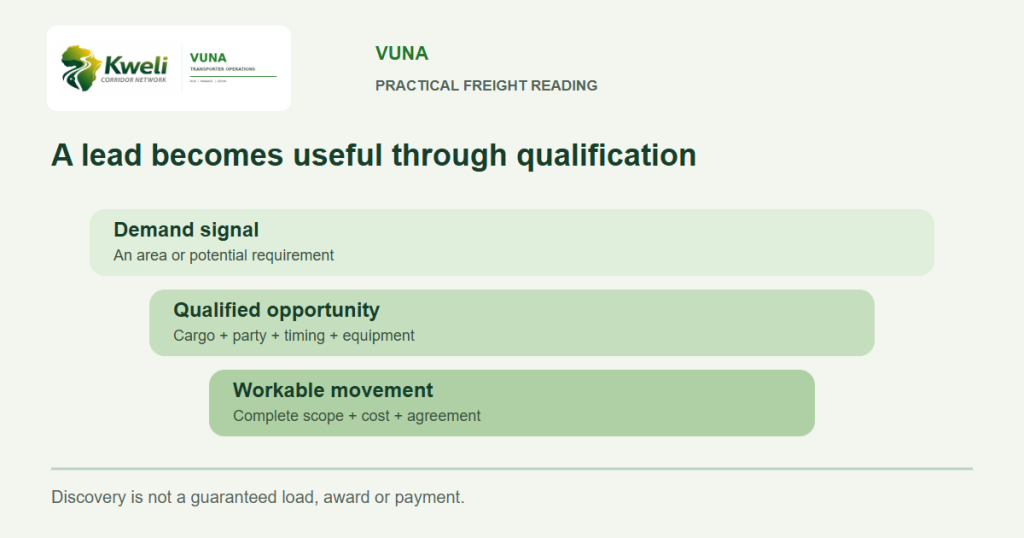
Vuna supports finding new demand beyond familiar relationships; it is rolling out and does not promise customers. KITE supports agreed-job execution and evidence. Both can support the business around free LX, but neither creates an automatic entitlement to repeat work.
A growing operator’s advantage is often a clear response, a realistic promise and a record that explains the outcome. Build a routine the next driver or coordinator can follow before taking on more work than the owner can personally remember.
Practical questions
Should I lower my rate immediately to win repeat loads?
First establish the full recurring scope and your complete costs. A discount needs a sustainable operational basis; higher volume alone does not make loss-making work profitable.
Does a completed LX job guarantee more work from the same customer?
No. Repeat movements depend on the customer’s needs, suitable capacity, performance and a further agreement between the parties.
Reviewed 7 November 2026. Examples are illustrative, not customer case studies. Product availability and current terms should be checked through official Kweli or Synesys guidance.