Atlas + Synesys practical reading · Small, emerging and informally organised transport partners
Begin with one job record that another person can understand, then repeat the routine. The first month should build a usable habit around the freight brief, key changes, handovers and evidence. It does not need to become a complete business-system rollout.
The plan below is an illustrative adoption method, not a promised Atlas implementation timetable. Adjust it to the operator’s workload, literacy, devices and support. Some businesses will need longer, and that is a planning fact rather than a failure.
Week one: follow the work you already do
Take a recent movement and list where each fact lived: customer requirement, quoted scope, collection instruction, vehicle allocation, delivery evidence and invoice follow-up. Identify the most troublesome handover. Do not copy sensitive customer records into an uncontrolled practice file.
The World Bank’s Digital Africa work emphasises affordable, attractive technologies suited to users and learning through use. Applying that idea here means teaching a real task before expanding the process.
Week two: build a shared brief
For a suitable job, check cargo, sites, timing, vehicle, contacts and evidence needs. Distinguish confirmed facts from pending questions. Give each open question an owner. Ask the next person in the sequence to explain what they need to do.
Week three: record changes and outcomes
Keep a changed collection time or site instruction with the movement, including who confirmed it. Capture the actual delivery evidence and note unresolved exceptions. Do not rewrite earlier events to make the completed job look smoother than it was.
Week four: review whether the routine helps
- Could the driver find the right instruction?
- Could the office find the final agreed scope?
- Was the required evidence usable?
- Which question still required repeated calls?
- What should be simplified before the next movement?
Use observed results rather than claiming an automatic productivity percentage. A simpler brief may be the most valuable outcome of the first month.
Where Atlas and the partner relationship fit
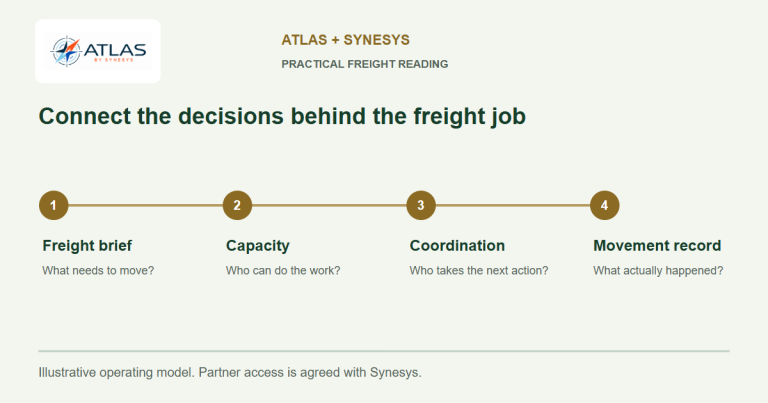
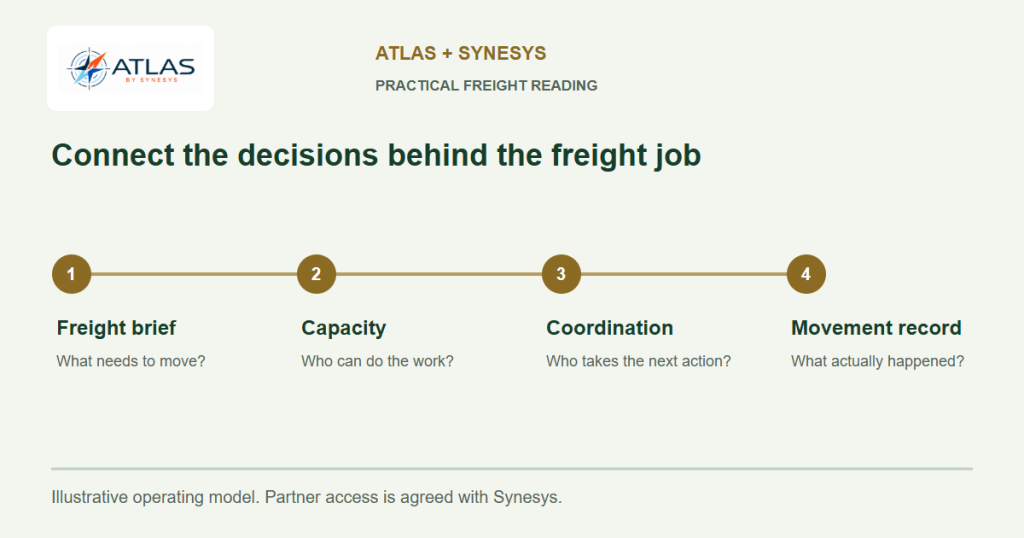
Atlas provides the Synesys and partner business context for briefs, capacity decisions, coordination and movement records. Trusted Synesys transport partners receive free software access under agreed terms, for Synesys work and their own loads. Confirm the actual onboarding and support process with the team.
An informally organised business may start with fragmented records; software alone does not establish registration, permits, tax status or any other compliance. Seek the relevant guidance for those separate requirements rather than treating an account as certification.
Free LX helps find or post specific large-truck B2B loads. It is a separate public network, not an automatic Atlas data feed. Use both roles clearly: access to opportunity and a routine that helps the operator carry out the work.
Practical questions
Is the four-week plan a guaranteed Atlas rollout timeline?
No. It is an illustrative adoption method. The pace depends on workload, access, support and the operator’s needs.
Does using ERP software formalise a business legally?
No. Registration, permits, tax and other compliance requirements are separate. Software records can support administration but do not certify compliance.
Reviewed 7 November 2026. Examples are illustrative, not customer case studies. Product availability and current terms should be checked through official Kweli or Synesys guidance.