Hamba practical reading · Drivers, dispatchers and small fleet owners
Teach the task the driver needs to complete, then support the first real job. A short parked practice session can explain the assigned movement, next stop, dispatch messages and evidence handover. Logging in is only the start of useful adoption.
A fleet owner may be comfortable with business software while a driver has rarely used a work portal. That is a support need, not a character judgement. Give the person time to ask questions without a queue of trucks or a customer waiting at the gate.
Start with a small practice route
- Open Hamba in the phone browser using the proper account.
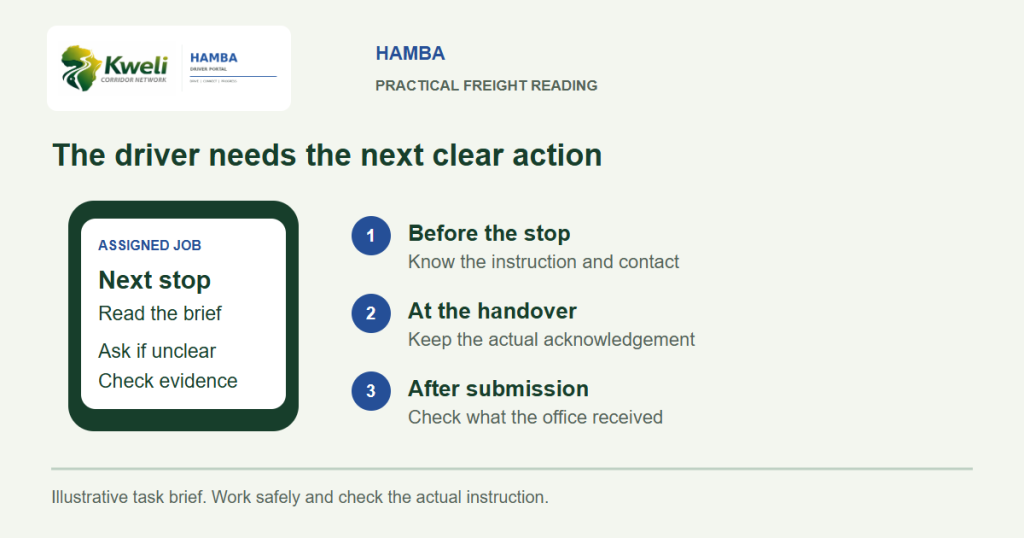
- Identify the expected assigned job and explain the next stop.
- Read a dispatch instruction and discuss what to do if it is unclear.
- Explain the evidence required for a real job and how receipt will be checked.
- Agree the fallback contact if access, power or signal fails.
Use clearly labelled practice material where appropriate and keep it out of live delivery records. Do not fabricate a completed job to demonstrate the portal.
Let the driver do the steps
Demonstrating rapidly on the owner’s phone can conceal the difficulty. Ask the driver to repeat the process on the device they will use, while parked. Check text size, battery and basic connectivity. Resolve confusing account or assignment issues before dispatch.
Explain the location boundary in plain language: assigned active-job tracking, not a general instruction to accept unlimited monitoring. Direct questions about actual product settings to the responsible support person.
Measure the working handover
After the first movement, ask whether the driver could find the right instruction, whether dispatch received usable evidence and how much chasing was needed. Those observations reveal more than a count of app openings.
If the first POD is incomplete, show which detail was needed and why. Improve the brief as well as the training; an office that never explained the required page should not treat the omission as a technology failure by the driver.
Use the current route while new apps are prepared
Hamba is free for drivers and runs in a browser. Echo Field Ops is a separate Android product that remains pre-release. Do not make adoption dependent on an unverified download or send an APK through informal channels.
Free LX supports the business opportunity, while KITE supports paid execution where the operator chooses it. The digital routine should help the person carry out the work, rather than add administration with no clear purpose.
Practical questions
What should a first driver-portal training session cover?
The correct account and assigned job, next stop, dispatch instructions, required evidence, location purpose and a safe fallback for access or connection problems.
How should a small fleet judge whether adoption is working?
Review whether drivers find the right instructions, evidence is usable and handovers require less avoidable chasing. Logins alone do not establish working value.
Reviewed 7 November 2026. Examples are illustrative, not customer case studies. Product availability and current terms should be checked through official Kweli or Synesys guidance.