Hamba practical reading · Drivers, dispatchers and small fleet owners
A useful driver update identifies the job, the event, its time and place, and the decision needed from dispatch. State what you know and what you have been told separately. Send it only when safely parked.
“Problem at loading” forces the office to start again with basic questions. A few clear facts can help the dispatcher contact the right person, assess the next commitment and explain the situation to the customer.
Use a five-part update
- Job and site: which movement and which stop.
- Time: when the event happened or the information was received.
- Fact: what you observed directly.
- Source: what a named site contact said, if relevant.
- Request: what dispatch needs to confirm or authorise.
An illustrative update is: “At collection for job reference X, checked in at 10:05. Site contact says loading is delayed and has not given a new time. Truck is parked in the designated area. Please confirm the next instruction and whether the delivery booking needs review.”
Do not turn a request into an approval
If the site asks for another delivery point or extra cargo, tell dispatch what was requested. Do not assume that request changes the commercial agreement. The office should confirm equipment suitability, authority and any revised scope with the responsible parties.
For urgent safety concerns, follow the carrier’s emergency and site procedures. A portal message is not a substitute for an appropriate urgent call or response. This guide does not prescribe emergency handling for a particular cargo.
Use Hamba as the job context
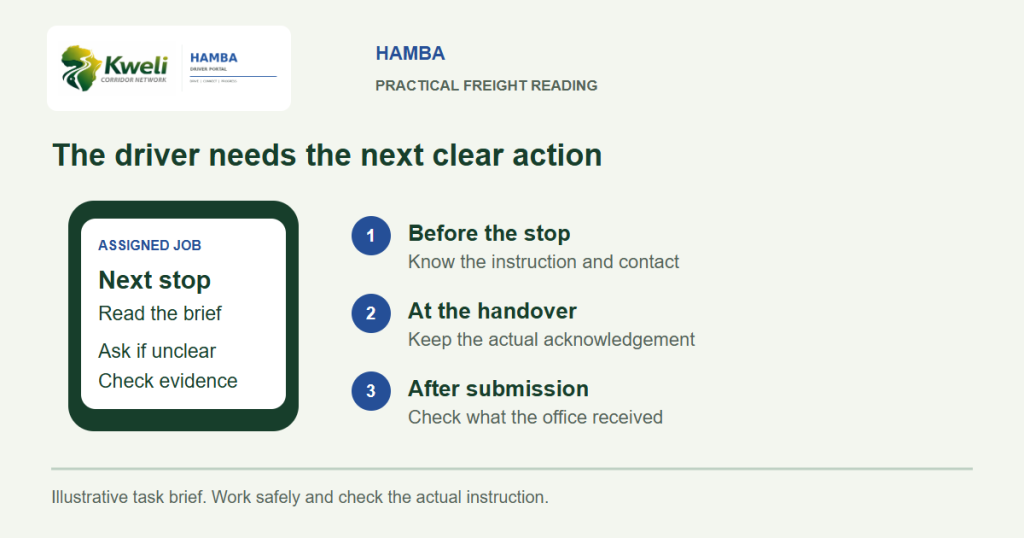
Hamba lets drivers read dispatch messages and work with their assigned job and evidence. Confirm the current communication method with the office; do not assume every possible messaging direction or notification is supported on every screen.
If a call resolves a material issue, make sure the office keeps the resulting instruction in the appropriate job record. Avoid leaving a changed destination solely in somebody’s memory.
Explain the unknown honestly
“I do not yet have a revised loading time” is useful information. Inventing an estimate to satisfy a customer can make later promises worse. KITE supports active-job follow-through, but devices and human updates can be incomplete.
The load may originate from free LX; the standard of coordination should be the same as for an established customer. A small fleet builds trust by making its updates clear, timely and true.
Practical questions
What is the most useful information in a driver exception update?
Identify the movement and site, time, observed fact, source of any additional information and the decision or help needed from dispatch.
Can a site contact’s request automatically change the agreed load?
Do not assume so. Refer the request through dispatch and the authorised parties, especially when equipment, route, price or service scope may change.
Reviewed 7 November 2026. Examples are illustrative, not customer case studies. Product availability and current terms should be checked through official Kweli or Synesys guidance.