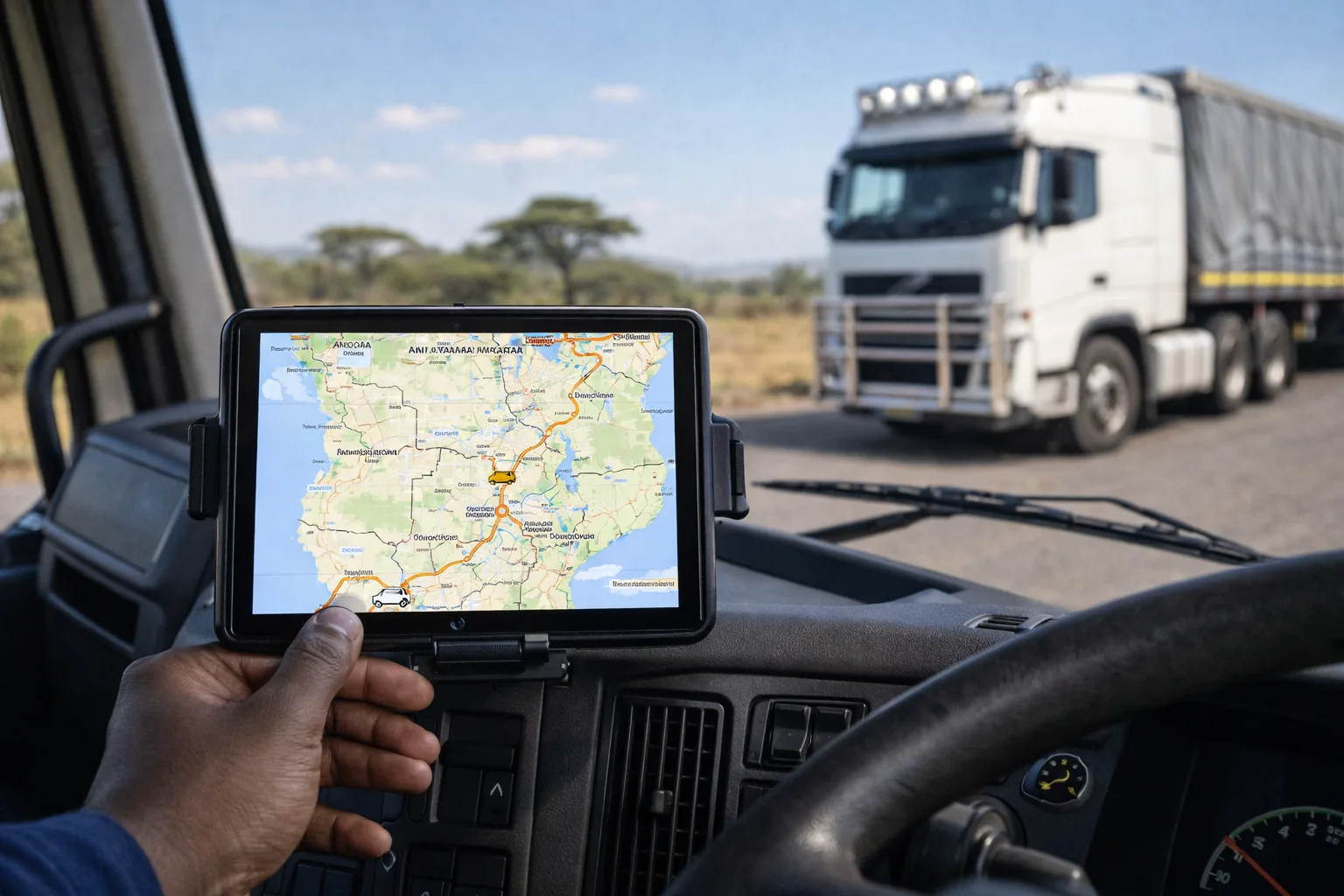
The Digital Freight Revolution Has Not Reached Africa — Yet
Globally, digital freight platforms have attracted billions in venture capital. Companies like Convoy, Uber Freight, and Loadsmart have transformed how loads are matched to trucks in North America and Europe. In Africa, however, the story is fundamentally different. The digital freight platforms that work in developed markets have largely failed to gain traction in Southern Africa, while WhatsApp — a messaging app never designed for logistics — has become the de facto tool for moving freight across SADC borders.
This article examines why digital freight platforms struggle in the SADC market, how WhatsApp has filled the gap, and what a purpose-built solution that combines the best of both approaches looks like in practice.
How Traditional Digital Freight Platforms Work
Digital freight platforms in developed markets follow a common model. Shippers post available loads to the platform, specifying origin, destination, cargo details, and desired pickup time. Carriers browse available loads or receive automated matches based on their location, truck type, and route preferences. Pricing may be set by algorithm, auction, or negotiation through the platform. The platform takes a commission (typically 10-20%) on completed transactions and handles payment processing.

This model works well in markets with reliable internet infrastructure, high smartphone penetration, operators comfortable with app-based workflows, standardised freight processes, and sufficient market density to create a liquid marketplace. In the SADC region, several of these conditions do not fully exist, which explains why copy-paste approaches from Silicon Valley have struggled.
Why Digital Freight Platforms Struggle in SADC
Understanding the barriers to traditional platform adoption in Southern Africa is essential for anyone building or evaluating freight technology for the region.
Connectivity and Data Costs
Mobile data in many SADC countries remains expensive relative to incomes. While 4G coverage is expanding, it remains patchy along many cross-border routes, particularly in rural Mozambique, northern Botswana, and parts of Zambia. A platform that requires constant data connectivity to function — for real-time tracking, in-app messaging, and load browsing — faces fundamental accessibility barriers.
Many transport operators manage their data usage carefully, preferring WhatsApp (which is efficient with data and often included in telco bundles) over data-hungry standalone applications.
Trust and Relationship-Based Business
Cross-border trucking in Southern Africa runs on relationships. A shipper choosing an operator for a R60,000 load of goods across three countries is making a significant trust decision. They want to know who the driver is, whether the operator has done this route before, and what happens if something goes wrong. Digital platforms that reduce this to a profile page and star rating miss the depth of trust verification that the SADC market demands.
Payment Complexity
SADC cross-border freight involves multiple currencies, varying payment terms, and limited access to formal banking for some operators. Platform-based payment processing assumes participants have bank accounts, stable internet for payment confirmation, and trust in electronic payment systems. In reality, many transactions are settled in cash, via bank transfer, or through mobile money — often across different countries’ systems.
Market Fragmentation
The SADC freight market is fragmented across thousands of small operators, many running one to five trucks. Unlike the large carrier fleets that populate North American freight markets, SADC operators are dispersed, informal, and accustomed to doing business through personal networks rather than digital marketplaces. Building sufficient marketplace liquidity — enough shippers and carriers to make the platform useful — is exceptionally difficult in this environment.
App Fatigue and Phone Limitations
Many operators in the SADC market use entry-level or mid-range smartphones with limited storage capacity. Asking them to download, learn, and regularly use a dedicated freight app competes with their existing phone usage. Every megabyte of storage and every minute of learning time is a barrier. Apps that are rarely used get deleted; platforms that require regular engagement to maintain a profile struggle to retain users.
How WhatsApp Became the Freight Platform of Choice
WhatsApp is already installed on virtually every smartphone in Southern Africa. Operators, shippers, and brokers use it daily for personal and business communication. Its adoption for freight logistics was organic — participants simply started using the tool they already had to solve the problem of finding loads and trucks.

The Rise of WhatsApp Load Groups
WhatsApp load groups emerged as informal freight exchanges. An operator or broker creates a group, invites contacts, and members post available loads and available trucks. Groups typically organise around corridors (Durban-Harare loads, Joburg-Lusaka loads) or cargo types (fuel tanker loads, agricultural freight). Some groups have hundreds of members and see dozens of load postings daily.
Why WhatsApp Works for SADC Freight
WhatsApp succeeds where purpose-built platforms fail because it has zero adoption barrier — no new app to download, no account to create, no learning curve. It works on low data budgets and is often included in telco data bundles. It supports rich media — operators can send photos of trucks, documents, and location pins. It enables direct personal communication that supports relationship building. It works offline for composing messages, syncing when connectivity returns. And it is trusted — people already use it for their most important personal and business communication.
The Limitations of WhatsApp for Freight
Despite its advantages, raw WhatsApp groups have significant limitations for freight logistics. Groups become noisy with irrelevant messages, making it hard to find relevant loads. There is no search functionality for load postings. Verification of members is limited — anyone added to a group can post. There is no structured data for matching (load details are posted as free text). Load duplication across multiple groups wastes time. And there is no trust mechanism beyond personal knowledge of other members.
The Best of Both Worlds: WhatsApp-Native Freight Platforms
The most promising approach for SADC freight technology is not choosing between WhatsApp and a digital platform, but building platform intelligence on top of WhatsApp’s unmatched reach and familiarity.
Kweli represents this approach. Rather than asking operators to download a new app, Kweli opens in the browser every phone already has, and it is WhatsApp-integrated. But unlike raw WhatsApp groups, Kweli adds structure, verification, and trust mechanisms that address the limitations of informal groups.
Structured Load Matching, Not Group-Chat Scrolling
Instead of free-text load postings lost in group chat noise, Kweli provides structured load alerts with consistent formatting — origin, destination, cargo type, weight, truck type required, and timeline. Operators receive corridor-specific alerts matching their routes and capabilities, reducing the time spent scrolling through irrelevant posts.
Trust and Verification Through Webcards
Kweli’s Webcard system provides what raw WhatsApp groups lack — a verifiable digital profile for each member. A Webcard shows an operator’s company details, fleet composition, regular routes, and community trust ratings. Shippers can review a Webcard before entrusting their cargo, and operators can build a portable reputation that travels with them across corridors and business relationships.
Zero Adoption Barrier
Because Kweli opens in the browser every phone already has, operators do not need to download a new app, create a new account, learn a new interface, or use additional mobile data. They join, participate, and benefit through the same tool they use for everything else. This eliminates the adoption barrier that has killed more sophisticated platforms in the SADC market.
Comparing the Three Approaches
When evaluating how to find and post loads in the SADC market, operators and shippers effectively choose between three approaches: informal WhatsApp groups, traditional digital freight platforms, and WhatsApp-native platforms like Kweli.

Reach and Accessibility
Informal WhatsApp groups score highest on raw accessibility but are limited by the group admin’s personal network. Traditional platforms potentially offer the widest reach but struggle with adoption. WhatsApp-native platforms combine broad accessibility with structured growth, reaching operators who would never download a standalone app.
Trust and Verification
Informal groups offer no formal verification — trust is personal knowledge. Traditional platforms typically offer profile verification and ratings but within a system many SADC operators do not use. WhatsApp-native platforms with Webcard-style verification provide trust signals within a familiar, trusted environment.
Cost to Users
Informal WhatsApp groups are free but cost time in noise filtering. Traditional platforms typically charge commissions of 10-20% per transaction. Kweli and similar WhatsApp-native platforms offer free basic access, generating revenue from optional premium features rather than per-transaction commissions — keeping costs low for operators already operating on thin margins.
What the Future Looks Like
The future of digital freight in Southern Africa will not look like Silicon Valley’s version. It will be mobile-first, low-data, relationship-aware, and built on existing communication patterns rather than replacing them.
Expect to see more WhatsApp-native tools that add AI-powered load matching, automated document verification, and predictive analytics — all delivered through the messaging interface operators already know. Payment integration through mobile money and regional banking networks will reduce cash handling. And trust systems that combine community ratings with verified credentials will make it easier for operators and shippers to do business with confidence across borders.
For operators, the message is clear: technology that works with your existing workflow will always beat technology that tries to replace it. Joining platforms like Kweli that build on WhatsApp is a practical first step into the digital freight future without the friction of traditional platforms.
Related Articles and Resources
Explore more about SADC trucking logistics:
External References
Frequently Asked Questions
Why do digital freight platforms fail in Africa?
Traditional digital freight platforms struggle in Africa due to high data costs, limited connectivity on trucking routes, low app adoption among operators, relationship-based business culture, payment complexity across multiple currencies, and fragmented markets with many small operators.
Is WhatsApp good enough for finding truck loads?
WhatsApp is the most widely used tool for finding loads in SADC, but raw WhatsApp groups have limitations including noise, no search, no verification, and no structured matching. WhatsApp-native platforms like Kweli address these limitations while maintaining WhatsApp’s accessibility advantages.
How does Kweli differ from WhatsApp load groups?
Kweli is WhatsApp-integrated but adds structured load alerts, member verification through Webcards, community trust ratings, and corridor-specific organisation. Unlike informal groups, Kweli provides accountability and trust mechanisms while maintaining the zero-adoption-barrier of WhatsApp.
Do I need to download an app to use Kweli?
No. Kweli opens in your phone’s browser at lx.kweli.co.za. You do not need to download a separate app, create a new account, or use additional mobile data beyond your normal WhatsApp usage.
What commission does Kweli charge on loads?
Kweli does not charge commissions on loads. The basic platform is free to use for operators, shippers, and brokers. Revenue comes from optional premium features, not from taking a percentage of your freight earnings.
Can freight brokers use WhatsApp platforms like Kweli?
Yes. Kweli is designed for all participants in the freight ecosystem, including brokers. Brokers can post loads, access verified operators across multiple corridors, and build their reputation through the Webcard and trust rating system.
Kweli Load Exchange
Now find a load for your truck — or a truck for your load
Free for transporters and shippers. No commission, no subscription.
Local
and cross-border
See
who you are dealing with
R0
commission, always
List your truck and its corridors, or post a load. Your corridors decide which loads we show you first — they do not lock you out of the rest. Body, weight, fit, papers: we show them, and you decide.
WhatsApp-integrated · your number is your account. Nothing from an app store — you finish with your trucks and their corridors on the board.
New to Kweli? See what the network does → — load exchange, driver registry and the Pulse community.