Kiungo practical reading · Freight brokers, agents, 3PLs and their clients
A proposed truck substitution needs a check of authority, suitability and the agreed operating process. Do not assume another vehicle is acceptable because it can reach collection. Tell the responsible parties what has changed and obtain the required agreement before acting.
In an illustrative brokered movement, the original articulated truck becomes unavailable. A replacement has a different trailer and driver. The customer’s loading equipment, site access and cargo requirements may all be affected even if the quoted payload looks similar.
Check the change in three parts
- Authority: who may propose and approve the replacement under the current arrangements?
- Capability: does the actual vehicle, driver and equipment meet the job requirements?
- Communication: who needs the revised details before arrival or dispatch?
Confirm current vehicle and driver records through the intended process. A registration number in a message is not evidence that every operational or contractual condition has been met.
Keep the original and revised scope distinguishable
Record the reason for the proposed change, the replacement offered, the person confirming it and the revised readiness time. If price or service conditions change, resolve those too. Keep a pending proposal separate from an accepted substitution.
A usable note might say: “Original truck unavailable. Replacement offered with the required body type; loading compatibility and site acceptance still awaiting confirmation.” It should not say “replacement approved” before the approval arrives.
Use the broker’s mandate correctly
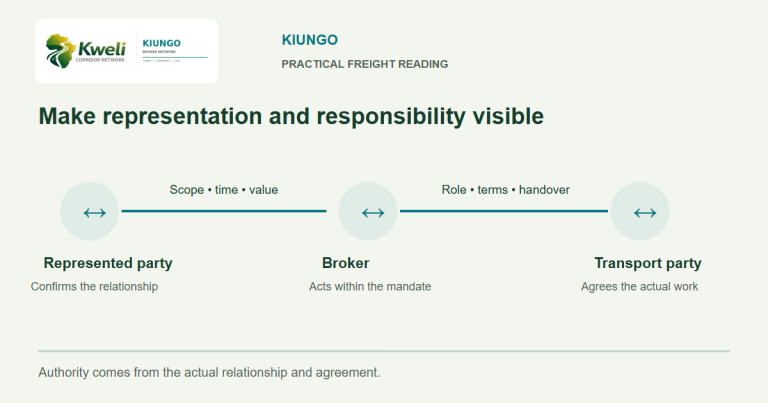
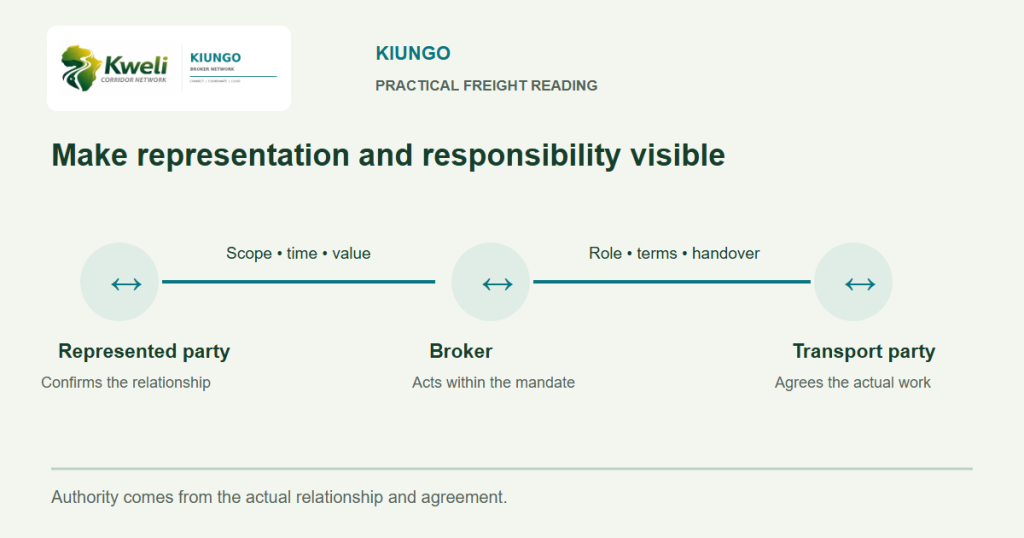
Kiungo supports defined representation and mandates. Use those boundaries to identify who may act, rather than assuming the broker can accept every operating variation. The contracting parties remain responsible for their agreements and the carrier for a suitable execution plan.
This is practical coordination guidance, not legal advice about the right to substitute in a particular contract. When the agreement is disputed, seek the appropriate professional advice and do not conceal a material change.
Update the people doing the work
Dispatch and the site need the confirmed details. The driver needs the current brief, not a screenshot for the original vehicle. If KITE supports execution, ensure the actual allocation reflects the agreed job through the applicable workflow; this article does not prescribe a particular screen or override.
Work found through free LX deserves the same discipline. If no suitable approved replacement can meet the requirement, tell the other party early and agree the next step rather than allowing the wrong truck to arrive.
Practical questions
Can any truck with enough nominal payload replace the agreed vehicle?
No. Check the actual equipment, loading compatibility, site requirements, timing and required approvals. Payload is only part of suitability.
Can a broker approve every change automatically?
No. Authority depends on the representation arrangement and relevant agreements. Confirm the limits and seek the required approval.
Reviewed 7 November 2026. Examples are illustrative, not customer case studies. Product availability and current terms should be checked through official Kweli or Synesys guidance.